Move Like Water: The Dancers Turning Fluidity Into a Philosophy of Change
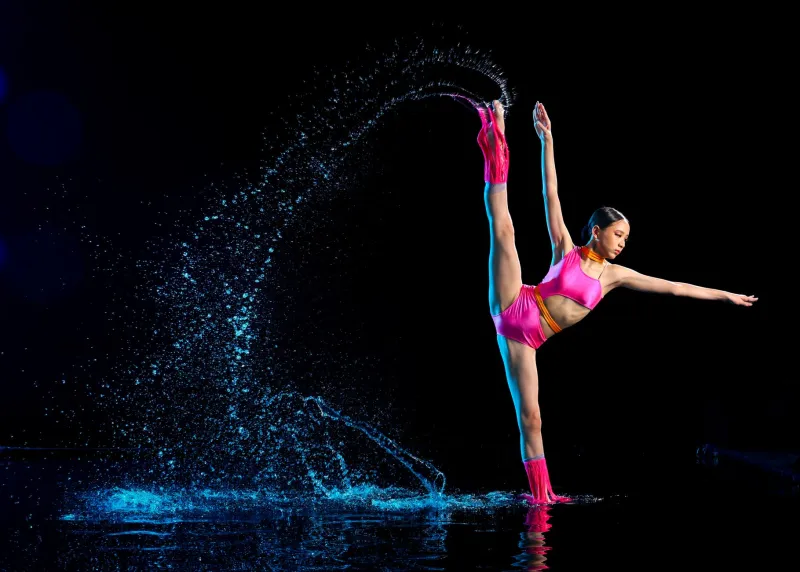
There's a moment in a river just before it bends — where the water hesitates, almost imperceptibly, before committing to a new direction. Choreographer Dani Osei says she thinks about that moment constantly. It's in her warm-ups, her rehearsal notes, even the way she coaches her company through a difficult transition in a piece.
"That pause before the bend," she says, "that's where all the meaning lives."
Osei is part of a growing movement — and yes, the word is intentional — of contemporary dancers and choreographers across the US who are using water not just as visual metaphor or aesthetic texture, but as a full philosophical framework. For them, hydrology isn't just science. It's choreography. And the body in motion isn't just expressing emotion — it's enacting something much older and stranger: the river's eternal argument with time.
The Body as Watershed
The conversation about fluidity in dance isn't new. Isadora Duncan was drawing from ocean waves over a century ago, and butoh has long treated the body as a kind of liquid medium. But what's different now feels less like aesthetic borrowing and more like urgent inquiry.
We're living in a moment saturated with the language of change — political, ecological, personal. And a lot of contemporary choreographers are finding that classical narrative structures, the kind with clear beginnings and triumphant resolutions, just don't hold the complexity of what people are actually feeling. Water does.
"Rivers don't resolve," says Marcus Teel, a Brooklyn-based movement artist whose recent piece Confluence premiered at a converted warehouse in Red Hook last spring. "They carry. They deposit. They carve slowly and then sometimes all at once. That felt much more honest to me than any arc I could write."
Confluence featured seven performers moving through a score built around hydrological concepts: laminar flow, turbulence, evaporation, sediment. Teel spent months consulting with a hydrologist at Columbia before a single step was set. The result was something audiences described, repeatedly, as disorienting in the best way — like watching thought itself try to find its own level.
Yielding as Strength
One of the most radical ideas embedded in water-inspired choreography is the reframing of yielding — giving way, absorbing pressure, finding the path of least resistance — as a form of power rather than weakness.
For choreographer Soleil Vásquez, who works primarily in Houston and tours regionally across the South, this is deeply personal and deeply political.
"In a lot of Western performance traditions, strength looks like rigidity," she says. "Upright posture, held lines, controlled force. But water erodes mountains. Water gets through everything eventually. I'm interested in that kind of strength — the kind that doesn't announce itself."
Her piece Low Country, which toured through Texas and Louisiana last year, drew explicitly from the hydrology of Gulf Coast wetlands — ecosystems that are themselves in crisis, slowly swallowed by rising seas. The dancers moved in ways that mimicked tidal rhythms, their bodies sometimes barely moving at all, sometimes surging, always in relationship with each other and the floor beneath them.
"The floor is the landscape," Vásquez explains. "And the landscape is changing. That's not metaphor — that's just the truth we're dancing inside of."
Collective Current
Maybe the most compelling dimension of this movement is what it has to say about collective action — about how individual bodies become part of something larger.
Watch a river long enough and you stop seeing water as a single thing. You see it as a conversation between millions of molecules, each responding to pressure, gravity, and the bodies around it. No molecule is leading. No molecule is following. The direction emerges from relationship.
Choreographer and educator Yara Mbeki, who runs a community dance program in Detroit called The Tributary, has built her entire pedagogical practice around this idea.
"I use the word 'tributary' deliberately," she says. "Because every person in my classes is their own stream. They have their own history, their own force, their own direction. What we're practicing together is how to join something without disappearing into it."
The work she does with young dancers — many of them from neighborhoods that have lived through decades of economic erosion and urban disinvestment — isn't just about technique. It's about what it feels like to be part of a current. To matter to the direction of something larger than yourself.
"That's what rivers teach," Mbeki says quietly. "Every single part of it matters to where it ends up."
Impermanence as Practice
There's a grief in water-based work that most choreographers don't shy away from. Water is impermanent by nature — always moving, always transforming, never the same twice. And increasingly, that impermanence feels less like poetic observation and more like lived reality.
Dani Osei's newest piece, still in development, is built around the concept of a river delta — that final, spreading exhale before a river meets the sea. She describes it as a meditation on endings that aren't really endings.
"A delta is where the river loses its name," she says. "It just becomes ocean. And I keep asking my dancers: what does it feel like to lose your name and become something bigger? Is that loss? Or is that the point?"
The question hangs in the air the way good choreographic questions do — not demanding an answer, just insisting you sit with the asking.
Why Now
It's probably not a coincidence that so much contemporary American dance is turning to water at this particular moment. We're watching actual rivers change — flooding, drying, shifting course. We're watching social movements surge and eddy and occasionally carve new channels through what seemed like solid ground. We're watching the self — that fixed, bordered, clearly-defined thing — become a little harder to locate.
Water doesn't promise stability. It promises movement. And maybe that's what these choreographers are offering: not a map of where we're going, but a way of moving that can handle not knowing.
"The river doesn't need to know where it's going," Marcus Teel says, somewhere between laughing and meaning it completely. "It just keeps going. That's the whole practice."
And in studios from Brooklyn to Houston to Detroit, bodies are learning to do the same — to bend before the bend, to carry what they carry, to carve slowly and sometimes all at once.