Where the Rust Meets the River: Art Is Healing America's Forgotten Industrial Waterways
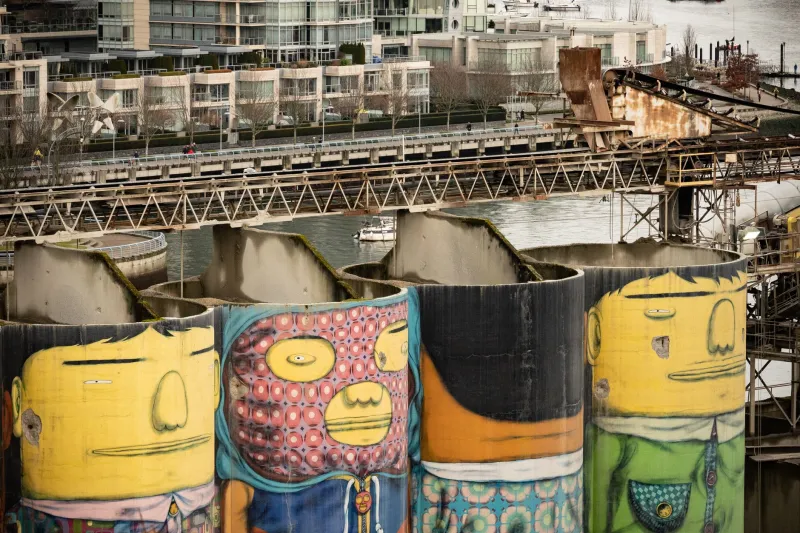
There's a particular kind of silence that settles over an industrial waterway. It's not the peaceful quiet of a forest creek or a wide prairie stream. It's heavier. More complicated. It carries the weight of what was extracted, what was dumped, what was quietly forgotten when the factories closed and the jobs left and the river was left to manage the aftermath alone.
But something is shifting along those neglected banks. Slowly, stubbornly, beautifully.
Across the United States, communities are reclaiming their contaminated rivers — not just with cleanup crews and environmental legislation (though those matter enormously) — but with art. With performance. With memory. With the radical act of showing up and making something in a place that was never supposed to be beautiful again.
The Canal That Became a Canvas
Take the Gowanus Canal in Brooklyn, New York. For decades, it was shorthand for urban neglect — a Superfund site so thick with industrial pollutants that it earned grim nicknames and grimmer reputations. But even as EPA remediation plans crawled through bureaucratic channels, artists moved in. Studios, galleries, and creative collectives began clustering along its banks, drawn by cheap rent, yes, but also by something harder to articulate: the canal's strange, almost gothic beauty. The way the water caught the light at dusk. The way its history felt so present, so unresolved.
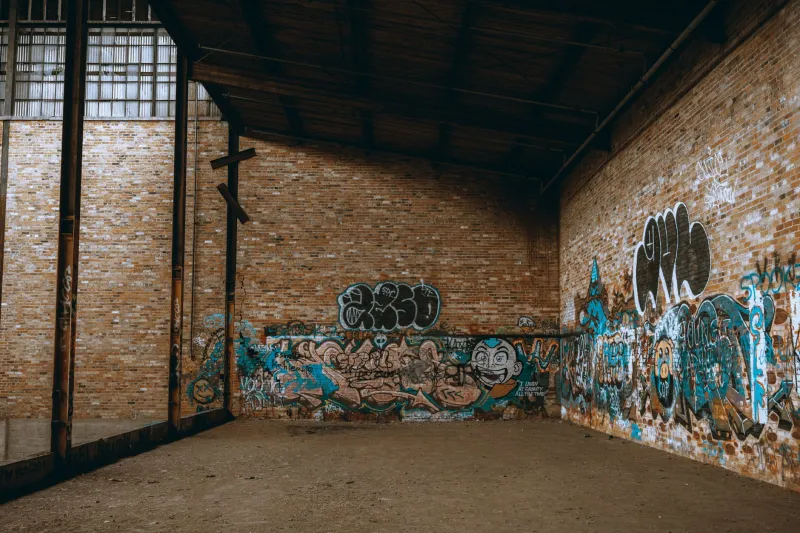
Organizations like the Gowanus Canal Conservancy began weaving ecological restoration with public art programming, creating community gardens and gathering spaces that doubled as living installations. Artists installed floating sculptures. Performers staged water-based pieces at the canal's edge. Muralists covered corrugated warehouse walls with imagery that honored the neighborhood's immigrant history and its industrial past without romanticizing either.
The canal didn't become pristine. But it became present again — a place people returned to, not just passed by.
Land Art as Environmental Testimony
Further west, along the banks of the Cuyahoga River in Cleveland — the river that famously caught fire in 1969 and helped spark the modern environmental movement — a different kind of reclamation is underway. The river's fire was a turning point in American environmental history, but the cultural memory of that moment has often been filtered through shame and spectacle rather than community ownership.
Local artists and environmental educators have been working to change that. Land art installations along the Cuyahoga's restored sections invite visitors to sit with the river's story — not as a cautionary tale owned by textbooks, but as a living, complicated narrative that belongs to the people who live alongside it. Sculptural markers trace the river's course. Interpretive art pieces use reclaimed industrial materials — salvaged steel, repurposed pipe, fragments of old machinery — to create visual dialogues between the river's industrial past and its ecological present.
This is art as testimony. As truth-telling. As a way of saying: we were here, this happened, and we're still here.
The Performance of Presence
Not all waterway reclamation looks like sculpture or mural work. Some of the most powerful interventions are ephemeral — performances and rituals that don't leave a physical trace but imprint something on the community that witnessed them.
In cities from Pittsburgh to Portland, artists have organized water-based performances along urban rivers that were once too polluted to approach safely. These events — sometimes intimate, sometimes drawing hundreds of onlookers — create a kind of collective permission. Permission to care about a place that was told it wasn't worth caring about. Permission to grieve what was lost, and to imagine what might return.
There's a long tradition in Indigenous communities of ceremony as a form of environmental stewardship, of honoring water as a living relative rather than a resource or a waste channel. Contemporary waterway art movements, at their best, are learning from and collaborating with those traditions — centering Indigenous voices and knowledge as essential, not supplementary, to the work of healing.
What Healing Actually Looks Like
It would be easy to package these stories as feel-good urban renewal narratives — art saves the day, river blooms, credits roll. But the artists and organizers doing this work are clear-eyed about its limitations and its stakes.
Artistic reclamation doesn't substitute for environmental justice. It doesn't replace the accountability of corporations that contaminated these waterways, or the need for sustained public investment in remediation. In fact, the most thoughtful practitioners are actively wary of creative placemaking being co-opted as a gentrification tool — a way to make polluted neighborhoods aesthetically interesting enough to attract development without addressing the underlying inequities that allowed the pollution to happen in the first place.
The communities most affected by industrial waterway contamination are disproportionately low-income and communities of color. Any art practice that doesn't center those communities — their histories, their leadership, their vision for what healing looks like — risks becoming just another form of displacement dressed up in murals.
The movements that are getting it right are slow, relational, and community-rooted. They're less interested in spectacle than in sustained presence. They show up year after year, project after project, building trust alongside beauty.
The River as a Mirror
There's something profound about choosing a river — a thing that moves, that changes, that carries everything downstream — as the site for collective healing. Rivers don't hold still for easy metaphors. They flood and recede. They carry toxins and seeds and stories all at once.
Maybe that's exactly why they're such powerful places to make art. Because making art in a complicated place forces you to hold complexity — to resist the urge to resolve everything into a clean narrative, and instead to sit with the river as it actually is: scarred and resilient, polluted and alive, forgotten and, slowly, being remembered.
Along America's industrial waterways, something is being restored that can't be measured in water quality metrics alone. It's the sense that a place matters. That its story belongs to the people who live there. That beauty is not a luxury reserved for pristine landscapes, but a practice — sometimes a radical, necessary practice — that can take root anywhere, even in the rust, even in the silt, even in the slow brown water of a river learning to breathe again.