Drift and Discover: The Hidden Art Worlds Blooming Along America's Forgotten Riverbanks
There's a particular kind of beauty that only reveals itself to the unhurried. You won't find it on a curated Instagram feed or inside a white-walled gallery in a neighborhood that's already been written up in every lifestyle magazine worth its salt. You find it by slowing down, following the water, and paying attention to the places most people drive past without a second thought.
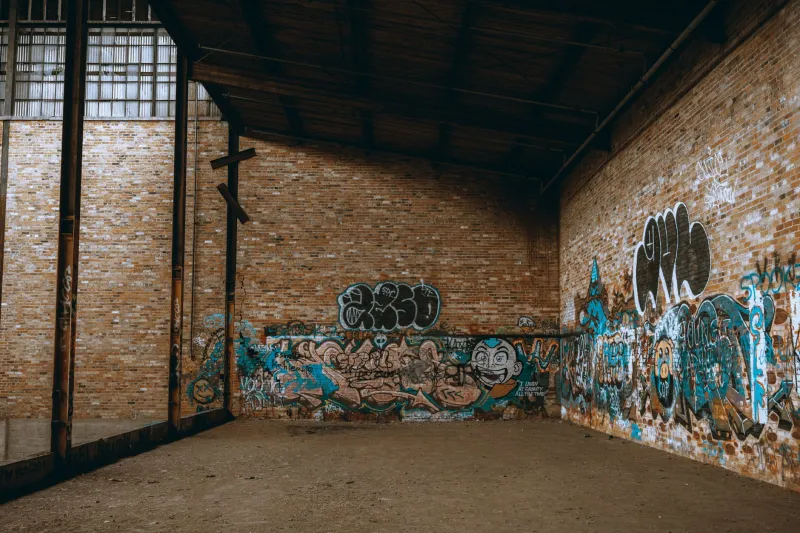
America's river towns have always held a complicated kind of magic. They were once the arteries of industry — loading docks stacked with timber, grain, and ambition. Then the highways came, and then the malls, and the waterfronts were left to their own quiet unraveling. Concrete crumbled. Warehouses emptied. The river kept moving.
And then the artists arrived.
The Flâneur Finds a New Current
The concept of the flâneur — the unhurried urban wanderer, observer of city life — was born in the boulevards of 19th-century Paris. But transplant that sensibility to the overlooked stretches of the Ohio, the Cumberland, the Fox, or the Willamette, and something unexpected happens. The act of wandering becomes less about spectacle and more about excavation. You're not window-shopping. You're reading the land.
In Paducah, Kentucky, where the Tennessee River meets the Ohio, a federally designated arts district has quietly grown from a near-abandoned floodplain neighborhood into one of the most organically creative communities in the American South. The Lower Town Arts District didn't emerge from a branding exercise — it grew because artists were offered affordable, flood-damaged homes in exchange for a commitment to rehabilitate and live in them. The result is a neighborhood that feels genuinely inhabited by creative life rather than staged for it. Murals seep into alleyways. Studios spill onto front porches. The river sits at the edge of everything, patient and wide.
Further north, along the banks of the Cuyahoga River in Cleveland — the river famously known for catching fire in 1969, a low point that paradoxically sparked serious environmental reform — the Tremont and Ohio City neighborhoods have cultivated a scrappy, unpretentious art scene that still manages to surprise. Galleries here don't feel precious. They feel lived-in. The river itself, once a symbol of industrial catastrophe, has become something of a muse — its complicated history feeding directly into the work being made along its shores.
Liminal Water, Liminal Making
There's a reason artists keep gravitating toward these in-between spaces. A riverbank is, by its very nature, a threshold — neither fully land nor fully water, neither fully past nor fully present. It's a place of constant negotiation, where erosion and accumulation happen simultaneously. For creative practitioners, that kind of instability is generative.
In Baton Rouge, Louisiana, a loose collective of sculptors and installation artists has been working along the Mississippi's industrial corridor, incorporating salvaged materials from the river's working infrastructure — rope, rusted chain, weathered wood — into large-scale pieces that feel like the river itself made them. There's no formal gallery. There's barely a name for what they're doing. That's partly the point.
In smaller river towns across the Midwest — places like Hannibal, Missouri, or Marietta, Ohio — individual artists and designers have set up studios in former warehouses and boat repair shops, drawn by cheap square footage and the particular quality of light that bounces off moving water. "There's something about working near a river that keeps you honest," one textile artist based in Marietta told a regional arts journal last year. "The water doesn't care about trends. It just keeps going."
Design That Speaks the River's Language
It's not only fine artists who've caught this current. Designers — furniture makers, ceramicists, architects — are increasingly looking to riverbank communities for both physical space and conceptual inspiration. The aesthetic that tends to emerge from these places resists the sleek and the polished. It favors texture, patina, the evidence of time.
In Richmond, Virginia, the James River corridor has become a quiet incubator for designers working in what might loosely be called an industrial-natural hybrid style: reclaimed wood paired with raw steel, concrete softened by organic forms, objects that look like they could have been pulled from the river and finished by hand. The James River Park System, one of the most impressive urban wilderness areas in the country, runs directly through the city, and its influence on the creative community there is palpable. You can feel the river in the work.
This isn't about romanticizing poverty or pretending that neglect is automatically beautiful. Many of these communities carry real histories of environmental harm, economic abandonment, and displacement — and the most thoughtful artists working in them are grappling with that complexity rather than papering over it. The best work being made on these shores doesn't celebrate the ruin. It sits with it, asks questions of it, and occasionally transforms it into something that points forward.
How to Wander Well
If you want to find this work, you have to move differently than you might in a conventional city. Forget the app. Forget the top-ten list. Drive toward the water and park where it feels right. Look for the buildings with paint on the windows that isn't quite covering what's underneath. Follow the smell of linseed oil and river mud.
Talk to people. Buy something small from a studio sale. Eat at the diner that's been there since before the artists came, because that diner is part of the ecosystem too.
The river has always been a site of passage, of transformation, of things moving from one place to another. The artists who've made their homes along these forgotten banks understand that intuitively. They're not trying to stop the current. They're learning to move with it — and making extraordinary things in the process.
America's overlooked waterfronts are alive. You just have to be willing to drift a little to find them.