Last Words, Living Art: The Creators Racing to Capture Languages on the Edge of Silence
There's a particular kind of silence that follows the death of a language. It doesn't announce itself. It doesn't arrive with a timestamp or a headline. It just settles, slowly, the way sediment does at the bottom of a river—until one day, someone reaches down and finds nothing left to hold.
Across the United States, a growing community of artists is refusing to let that silence win. Working in sound, sculpture, video, and immersive installation, they're transforming the spoken word into something you can stand inside of, something that touches you before you even realize what you're experiencing. This is preservation as poetics. This is the archive made electric.
When Language Becomes Material
For artists working at the intersection of linguistics and visual culture, the challenge isn't just documentation—it's translation in the deepest sense. How do you render the texture of a vowel sound in clay? How do you make the rhythm of a dying dialect feel urgent to someone who has never heard it spoken?
These questions drive practitioners like those working within Indigenous language revitalization movements in the Pacific Northwest and the Southwest, where dozens of Native American languages now survive with fewer than a handful of fluent speakers. Some of these artists were raised in communities where their ancestral tongue was already a whisper. Others came to the work through grief, through the death of a grandparent, through the discovery of a cassette tape in a shoebox.
What they share is a refusal to treat language as data alone. A word isn't just a word—it carries cosmology, ecology, humor, heartbreak. To archive it is one thing. To make someone feel it is something else entirely.
Sculpture That Speaks
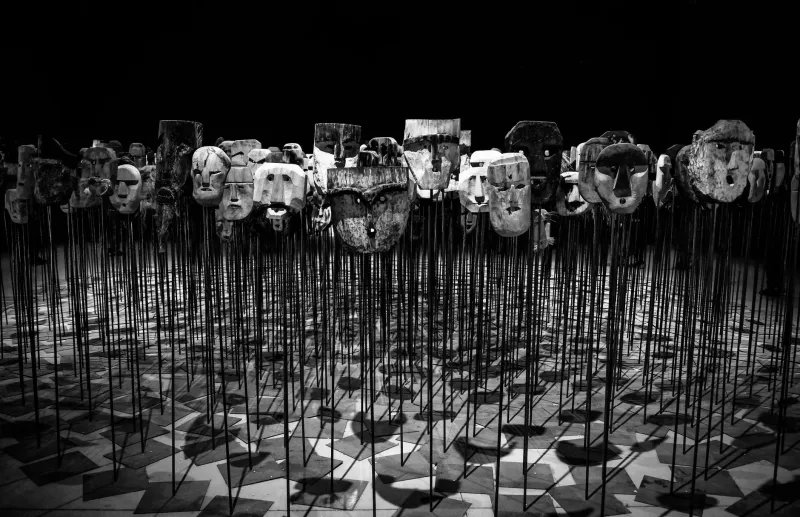
One of the most striking approaches emerging in contemporary practice involves translating phonetic patterns into three-dimensional form. Artists have begun working with linguists to map the acoustic signatures of endangered speech—its rises and falls, its pauses, its particular music—and then rendering those waveforms as physical objects. The result is sculpture that holds the shape of a voice even when the voice itself is gone.
In gallery settings across cities like Santa Fe, Portland, and Chicago, visitors have encountered these works and described feeling something they couldn't quite name. A kind of recognition that bypasses the intellect. You don't need to know the language to sense its weight.
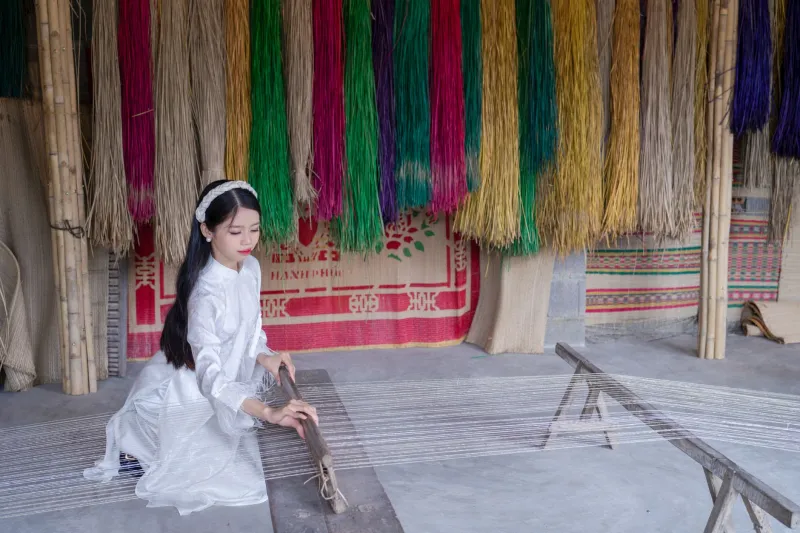
Other artists are working in a more explicitly communal register, gathering oral histories and weaving them—literally—into textile installations. The Diné (Navajo) tradition of weaving as storytelling has inspired a new generation of practitioners who see the loom as a kind of linguistic instrument. Each pattern a sentence. Each color a tone. The fabric doesn't just represent language; it performs it.
The Archive as Immersive Experience
Museums and cultural centers are beginning to catch up with what these artists already understand: passive display isn't enough. A recording in a vitrine behind glass doesn't ask anything of you. But step into a darkened room where the walls breathe with projected text in a language you've never seen, where speakers embedded in the floor carry voices that feel like they're rising from the earth itself—that demands your attention. Your stillness. Your presence.
Installations like these have been developed in collaboration with tribal nations and community language programs, ensuring that the work isn't extractive. The goal isn't to put a culture on display for outside consumption. It's to create a space where community members can encounter their own heritage in a new way, and where outsiders can approach it with the reverence it deserves.
This distinction matters enormously. There's a long and painful history of non-Native institutions treating Indigenous culture as aesthetic raw material. The artists doing this work most thoughtfully are the ones asking, always: who holds the authority here? Who benefits? Who was consulted?
Regional Dialects and the Vanishing American Voice
The urgency extends beyond Indigenous languages. Regional American dialects—the Gullah Geechee creole of the South Carolina and Georgia coasts, the distinctive speech patterns of Appalachian communities, the Yiddish-inflected English that once filled the streets of Lower Manhattan—are eroding under the pressure of media homogenization and geographic displacement.
Sound artists and documentary practitioners are turning their microphones and their creativity toward these communities too. Field recordings become the raw material for sonic installations. Oral histories become the foundation for video works that pair faces and voices with landscape, with food, with the particular light of a specific place at a specific time of day.
What these projects share is an understanding that language isn't separable from place. You can't preserve a dialect without preserving something of the world it grew from. And you can't witness its disappearance without feeling something about what else we're losing—the biodiversity, the local economies, the ways of knowing that don't translate into the dominant culture's vocabulary.
What Art Can Do That Archives Can't
Digital archives are essential. Linguists doing the painstaking work of documentation deserve every resource and recognition we can give them. But art does something different. It creates encounter. It makes the abstract visceral. It asks you to slow down, to listen, to sit with discomfort or wonder or grief.
When you walk through an installation built around a language that may soon have no living speakers, you're not consuming information. You're bearing witness. And bearing witness, it turns out, is one of the most radical things a person can do in an age that rewards speed and distraction above almost everything else.
The artists working in this space are building something more than archives. They're building bridges—between generations, between cultures, between the world as it is and the world as it was. And in doing so, they're asking the rest of us a quiet, persistent question: what are we willing to hold onto, and what are we prepared to let go of without a fight?
The answer, these works suggest, matters more than we might think. Because once a language is truly gone, the silence it leaves behind is a shape no sculpture can quite fill.