The Art of Staying Put: How Museums Are Making Space for the Lost Practice of Looking

Photo: Semowe, CC0, via Wikimedia Commons
The average museum visitor spends about 17 seconds in front of a painting.
Seventeen seconds. Enough time to glance, maybe snap a photo, register that yes, this is indeed a famous thing, and move on to the next famous thing. We arrive at museums with the same kinetic energy we bring to scrolling — a forward momentum that mistakes coverage for experience.
But something is shifting. Quietly, deliberately, in galleries from the Midwest to the coasts, a counter-movement is taking shape. Institutions are redesigning spaces, restructuring programming, and rethinking their entire relationship with visitors around a single, almost radical premise: what if we slowed down?
Designing for the Long Gaze
Walk into the Rothko Chapel in Houston and the architecture immediately tells you something. There's nowhere to rush. The octagonal space holds fourteen of Mark Rothko's dark, enormous canvases, and the room is calibrated for stillness — natural light filtering from a skylight above, simple seating arranged for contemplation rather than flow. People cry in there. Regularly. Not because they're sad, exactly, but because something in the sustained encounter with those paintings opens a door that speed keeps shut.
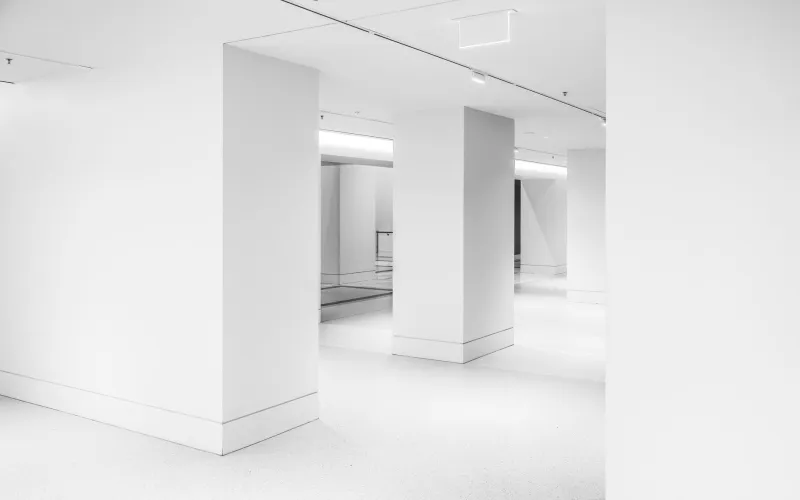
Rothko Chapel is an extreme example, but it points toward something a growing number of museum designers are taking seriously: the built environment shapes behavior. If you design a gallery for movement — wide corridors, high ceilings that encourage a sense of progression — you get movement. But if you design for dwelling, something different happens.
The Isabella Stewart Gardner Museum in Boston has long been a case study in this. Gardner's original arrangement of the collection — art hung in unconventional configurations, rooms furnished like inhabited living spaces — was always meant to encourage lingering. You're not supposed to understand it immediately. You're supposed to sit with it.
More recently, the Art Institute of Chicago has experimented with its Modern Wing by creating what curators call "slow rooms" — spaces with fewer works, lower lighting, and seating positioned to invite extended engagement with a single piece. The feedback from visitors has been striking: people report feeling more moved, more connected, and paradoxically more satisfied than when they cover the entire museum.
The Curriculum of Contemplation
Beyond architecture, institutions are building entire programs around the practice of looking slowly.
The Museum of Fine Arts in Boston has offered its "Thinking Through Art" program for years, which trains educators to use extended observation — sometimes 20 minutes with a single image — as a tool for developing critical thinking in students. What started as an educational methodology has become something more: a philosophy about what encountering art actually requires.
The Whitney Museum in New York has hosted "slow art" events where participants choose one work and spend an hour with it, guided through layers of observation by a facilitator. Participants often describe the experience in terms that sound almost therapeutic — a sense of presence, of time expanding, of noticing details that become increasingly strange and wonderful the longer you look.
This isn't accidental. It's a direct response to something institutions are increasingly willing to name: the smartphone has fundamentally changed how we inhabit physical space. Galleries have watched visitors arrive, photograph everything, and leave — technically present but experientially absent. The slow-looking movement is, at its core, a design response to a behavioral crisis.
What We're Actually Hungry For
Here's the thing, though: the success of these programs suggests that people aren't resisting slowness. They're hungry for it.
In a culture that has essentially gamified attention — where every platform competes for the shortest possible engagement, where even streaming services auto-play the next episode before the credits roll — the experience of being encouraged to simply stay with something is disorienting and then, almost immediately, deeply pleasurable.
Psychologists who study aesthetic experience have a term for what happens during extended engagement with art: aesthetic absorption. It's a state of focused, effortless attention that shares qualities with meditation — a quieting of the internal noise, a heightened sensitivity to the present moment. Research suggests it's genuinely restorative. It reduces cortisol levels. It increases feelings of meaning and connection.
The museum, it turns out, has always been capable of providing something the algorithm fundamentally cannot: an experience that gets richer the longer you give it.
Galleries as Counter-Cultural Space
There's a political dimension to all of this that's worth naming.
The attention economy is not neutral. It is designed — meticulously, expensively, by teams of behavioral scientists — to extract maximum engagement at minimum depth. The goal is never understanding. The goal is return visits, time on platform, data points. In that context, a museum that asks you to sit with a single painting for twenty minutes isn't just offering an aesthetic experience. It's offering a kind of resistance.
Some institutions are leaning into this framing explicitly. The Noguchi Museum in Queens, New York — dedicated to the sculptor Isamu Noguchi's work — has always operated with a contemplative ethos built into its DNA. The garden spaces, the way light moves through the building, the deliberate absence of explanatory text in certain areas: all of it is designed to create an experience that prioritizes encounter over information. You're not supposed to leave knowing more facts. You're supposed to leave having felt something.
This is a different value proposition than the blockbuster museum experience, and it's finding an audience that's increasingly exhausted by the alternative.
The Bench as Design Element
It sounds almost too simple, but one of the most meaningful design interventions in contemporary gallery spaces is the bench.
Where you put the seating — and whether you put it at all — communicates volumes about what kind of experience a museum believes it's offering. A bench positioned directly in front of a single work, at the right distance, angled slightly upward: that's a design decision that says stay. That's an institution committing to the idea that looking is not passive, that it takes time, that it has a physical dimension.
The Menil Collection in Houston, designed by Renzo Piano, has always understood this. The galleries are quiet, the light is extraordinary, and the seating is positioned not as an afterthought but as a fundamental part of the spatial experience. You can spend an afternoon there and feel genuinely rested.
Coming Back to the Surface
There's something almost tender about what museums are attempting right now. In a world that has made depth increasingly difficult to access, they're trying to hold space for it — literally, architecturally, programmatically.
It won't fix everything. Seventeen seconds will remain the average for most visitors in most galleries. But for the growing number of people who arrive specifically seeking the antidote to their own distraction, these spaces are becoming something important: proof that slowness is still possible, that looking is still a skill worth practicing, and that some things genuinely reveal themselves only to those willing to wait.
The art was always patient. We're just learning to meet it there.